

- What is an art registrar and what do they do?
- How is an art collection managed? The seven areas of a registrar’s work
- Registrar, Collection Specialist, Loan Registrar and Exhibition Registrar: what’s the difference?
- Three common misconceptions about art registrars
- Where do art registrars work?
- Beyond the museum: artists’ archives and luxury brand heritage
- How to become an art registrar
When you walk through an exhibition, you see the artworks in place, well lit and protected. What you don't see is the work that got them there.
Catalogue records, custom-built crates, condition reports signed at every step, insurance policies, export licences. Behind all of this is one specific professional: the art registrar, who manages the documentation, logistics and legal life of an art collection.
What is an art registrar and what do they do?
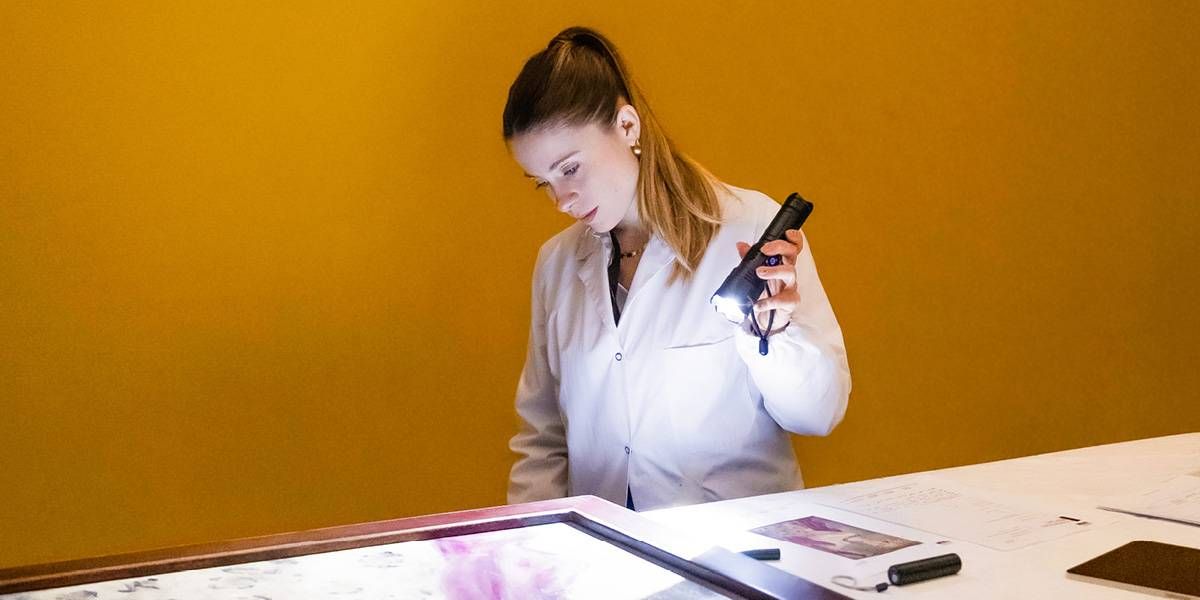
An art registrar is the professional responsible for the management, documentation, handling and safety of artworks in public and private institutions. Registrars follow an artwork through its whole life: from acquisition and cataloguing to conservation, from loans and shipping to installation, through to insurance and risk management.
It’s also a coordinating role. The registrar is the link between curators, conservators, insurers, shippers, lawyers and institutions: the person who knows where every work is, what condition it’s in and which documents it needs to travel.
How is an art collection managed? The seven areas of a registrar’s work
Managing a collection means keeping seven closely connected areas under control. Each has its own tools, documents and responsibilities.
1. Cataloguing and documentation
Every work gets an inventory number and a catalogue record covering artist, medium, dimensions, provenance, condition and location. Today it all lives in digital databases, and before any acquisition the work’s history is checked (due diligence).
2. Art handling and logistics
Every move is a risk, so it’s planned in detail: custom-built crates, specialist fine art shippers with climate-controlled vehicles and, for the most fragile works, a courier who travels with them. The registrar also coordinates installation and de-installation.
3. Preventive conservation
The aim is to prevent damage before restoration is ever needed: control of temperature, humidity and light, well-organised storage, and plans against pests, water, fire and theft. The work’s state is recorded in a condition report on every arrival and departure.
4. Loans
A loan is prepared months in advance, with a loan agreement, a facility report from the borrowing museum, and incoming and outgoing condition reports to compare when the work comes back.

5. Insurance
Works on the move or on display are covered by all risks and nail to nail policies, which follow the work from the lender’s wall until it returns. If damage occurs, the registrar handles the claim with the insurer.
6. Laws and regulations
In Italy, the main reference is the Code of Cultural Heritage and Landscape (Legislative Decree 42/2004), which governs the export, import and loan of protected works. Some materials also need CITES certificates, and copyright rules apply to reproductions and images.
7. Contemporary art and new media
Installations, video and time-based works mean documenting the artist’s instructions, inventorying the technical components and agreeing with the artist or their archive on who can authorise replicas and replacements.
Registrar, Collection Specialist, Loan Registrar and Exhibition Registrar: what's the difference?
"Registrar" covers several roles. In smaller institutions one person does it all; in major museums and large exhibitions they are separate jobs.
| Role | The question they answer | Everyday documents and tools | Where you'll usually find them |
|---|---|---|---|
| Collection Registrar | The question they answerWhere is every work in the collection, and what condition is it in? | Everyday documents and toolsInventory, catalogue records, database, condition reports, storage plans | Where you'll usually find themMuseums, foundations, private and corporate collections |
| Collection Specialist | The question they answerWhat does the collection tell us, and how do we open it up to the public? | Everyday documents and toolsProvenance research, digital archives, access and loan policies | Where you'll usually find themMuseums, artists' archives, luxury brand heritage |
| Loan Registrar | The question they answerCan a work travel, on what terms and with which documents? | Everyday documents and toolsLoan agreements, facility reports, export licences, all risks and nail to nail policies | Where you'll usually find themMajor museums and institutions with an active loan programme |
| Exhibition Registrar | The question they answerDoes every work in the show arrive, stay and leave safely? | Everyday documents and toolsShipping schedule, installation checklists, exhibition condition reports, security plans | Where you'll usually find themTemporary exhibitions, biennials, art fairs |
Three common misconceptions about art registrars
- “It’s an archive job.” Documentation is central, but registrars spend much of their time in storage, in the galleries, and at ports and airports alongside the works.
- “Only big museums need one.” Galleries, auction houses, art fairs, artists’ archives and private collections have the same needs, just on a smaller scale.
- “Art history is enough.” The job also calls for legal, insurance, logistics and project management skills.

Where do art registrars work?
Registrars work wherever artworks need to be managed, protected and moved:
- public and private museums, galleries and foundations;
- major international events such as biennials;
- artists’ archives and studios;
- auction houses and art fairs;
- fine art logistics and insurance companies;
- private and corporate collections and family estates;
- heritage departments at fashion, luxury and design companies.
Demand is growing as private collections expand, bequests and donations to institutions increase, art fairs and international events multiply, and archives and collections go digital.
How to become an art registrar
The most direct route is specialist postgraduate training that combines theory and practice. The skills you need fall into three groups:
- Technical skills: cataloguing, condition reporting, preventive conservation, logistics and installation.
- Legal and insurance skills: loan agreements, rules on moving cultural property, insurance policies and risk management.
- Management skills: project management, coordinating suppliers and institutions, managing data and digital archives.
Hands-on experience makes the difference: internships at museums, galleries, foundations or fine art logistics companies are often the first step into the profession. That’s why the most effective specialist programmes combine teaching by working professionals with an internship at an institution.
Studying Registrar and Collection Management at NABA
NABA, Nuova Accademia di Belle Arti, is an Academy legally recognised by the Italian Ministry of University and Research (MUR), with campuses in Milan, Rome and London. In the QS World University Rankings by Subject, it’s the top Italian Academy of Fine Arts and ranks in the world’s Top 50 for Art & Design.
NABA’s Master in Registrar and Collection Management in Milan is part of the Management Hub, NABA’s centre for managing the creative industries. It prepares you for the seven areas covered in this article and stands out for three things:
- Art law: Course Leader Alessandra Donati, an art law expert, founded and directed Italy’s first Master for registrars and devised the PACTA, a framework for protecting the authenticity and integrity of contemporary artworks.
- Cultural leadership: Course Leader Nicoletta Castellaneta brings over twenty years of experience running arts institutions, foundations and academies.
- Milan and luxury heritage: the programme is based in Milan, close to museums, foundations, art fairs and fine art logistics firms, and also covers heritage management for fashion, luxury and design brands.
You’ll find the curriculum, entry requirements, fees and start dates on the Master’s page.
NABA’s Master’s programmes are built around hands-on design practice. The link between study and career also shows in NABA’s employability data: according to the 2026 Employability Survey by Ipsos Doxa, 92% of NABA graduates are in work within a year of completing their studies.
FAQ
Collection management covers everything an institution does to look after its art collection: cataloguing and documentation, preventive conservation, art handling, loans, insurance and legal compliance. The goal is to always know where each work is, what condition it's in and which documents it needs to be displayed or lent.
The curator shapes the artistic and scholarly vision of an exhibition or collection, choosing the works and the story they tell. The registrar makes that vision happen safely, managing documents, loans, shipping, insurance and display conditions. The two roles work closely together, but with different responsibilities.
No. Restoration means working directly on the materials of an artwork, and that's the conservator's job. Registrars focus on preventive conservation: they monitor the environment, storage and handling to reduce the risk of damage, and when treatment is needed, they coordinate with conservators.
A condition report records the state of an artwork at a specific moment, with photos and notes on any damage or weak points. It's completed on arrival, on departure and at every key stage: comparing reports shows whether the work has changed during shipping or a loan.
A facility report is the document in which a museum or exhibition venue describes its spaces, security and fire safety systems, and its temperature, humidity and lighting conditions. Lenders review it before agreeing to a loan, to make sure the work can be displayed safely.
Nail to nail cover protects an artwork from the moment it comes off the lender's wall until it goes back up, including shipping and the exhibition period. It's often combined with an all risks policy, which covers every risk of damage or loss except for the exclusions listed. To study these topics at a professional level, NABA offers the Master in Registrar and Collection Management.
Are you dreaming of studying at NABA?
Talk to one of our advisors to explore our programmes and find the one that best fits your interests and goals.