

AFAM institutions and a future in the creative industries
For anyone finishing high school with a strong interest in the creative world — from art, design, film and fashion to communication, graphic design, set design and beyond — deciding what to do next is rarely straightforward. Alongside Italy’s traditional universities, there is an entire higher education system dedicated specifically to the arts: the AFAM system. This article explains what AFAM institutions are, how they work and why anyone planning a creative career should seriously consider them — not least because they currently represent one of the most dynamic and sought-after areas of Italian higher education.
What are AFAM academies?
AFAM is the Italian acronym for Alta Formazione Artistica, Musicale e Coreutica (Higher Education in Art, Music and Dance), and refers to Italy’s network of university-level institutions specialising in the arts. These are not universities in the conventional sense, but a parallel system with the same educational and legal standing, devoted exclusively to the artistic disciplines.
The sector includes several types of institution, all with a long-standing tradition. The Accademie di Belle Arti (Academies of Fine Arts) cover painting, sculpture, set design, decoration, restoration, photography and new media for the arts, and — increasingly — design, fashion, communication, graphic design and film. The Conservatori (Conservatoires) provide higher music education, ranging from instrumental performance to composition, from choral conducting to jazz and electronic music; the Accademia Nazionale di Danza is the corresponding institution for dance, while the Accademia Nazionale di Arte Drammatica trains professionals in theatre. The ISIA, Istituti Superiori per le Industrie Artistiche (Higher Institutes for Artistic Industries), are publicly funded institutions dedicated specifically to design and visual communication.
Many of these institutions award First-Level Academic Diplomas, three-year qualifications equivalent to a Bachelor of Arts, and Second-Level Academic Diplomas, two-year qualifications equivalent to a Master of Arts. They also commonly offer Academic Masters, specialisation programmes and, more recently, PhD programmes. In formal terms, the course structure mirrors that of a university degree — credits, examinations, internships and a final thesis — but differs substantially in approach, because teaching is built around studio and workshop practice rather than lectures.
Find out more about our programmes, campuses, studios and industry projects
Are qualifications awarded by AFAM institutions recognised?
A diploma awarded by an AFAM academy carries full legal status. It is a genuine academic qualification, recognised by the Ministry of University and Research (MUR) — the same ministry, until recently known as MIUR, that oversees Italy’s universities.
This recognition is based on a regulatory framework built in two stages. A law passed in 1999 reorganised the entire sector, formally establishing the AFAM system and placing it within state higher education. A second law, in 2012, set out the equivalence of AFAM diplomas to university degrees: the First-Level Academic Diploma is equivalent to a Bachelor of Arts, while the Second-Level Academic Diploma is equivalent to a Master of Arts.
This is a full equivalence, valid for entry to public-sector competitive examinations, for admission to Academic Masters and doctoral programmes, and for any other purpose for which a degree may be required in employment or further study.
At European level, AFAM diplomas sit within the European Qualifications Framework at the same levels as university degrees: level 6 for First-Level qualifications and level 7 for Second-Level qualifications. This guarantees recognition of the qualification across the rest of the European Union and makes it easier both to continue studying abroad and to enter the international job market.
What is the difference between an AFAM academy and a university?
The substantive difference between an AFAM academy and a university has nothing to do with the value of the qualification: it lies in the teaching approach. At universities, even on the most applied programmes, theory tends to dominate, with practical work supporting it. In AFAM academies, the relationship is reversed: the studio is not an addition to the course, it is the course. Students work continuously on projects, exercises, performances, artworks, graphics, garments, costumes and other forms of production, depending on the field. Theory is present, and rigorous, but it serves practice rather than the other way round.
The same logic shapes the teaching staff. Many lecturers at AFAM institutions are practising professionals: artists, designers, fashion designers, musicians, directors, screenwriters, and communication or graphic design experts who continue to work in their field while teaching.
The benefit is twofold. On the one hand, students learn from people who genuinely practise the discipline, using the methods, pace and tools of the professional world. On the other, academies tend to build strong working relationships with companies, studios, galleries, theatres and festivals — relationships that translate into internships, commissions and graduate opportunities both during and after the course.
Class sizes are typically smaller than at university, particularly on second-level programmes, and relationships with lecturers tend to be closer. Ultimately, choosing between a university and an AFAM academy comes down to one’s future plans. For an academic research career in the humanities or sciences, university is the natural route. For anyone planning to work in art, fashion, design, communication, graphic design, music, theatre, set design or film in a practical, project-led capacity, an AFAM institution is generally the better fit.
What does accreditation mean and why should it be verified?
One point worth clarifying is ministerial accreditation: the recognition granted by the Ministry to AFAM institutions, without which their qualifications carry no legal weight.
State academies — Brera, the Accademia di Belle Arti di Roma, the ISIA institutions, the Accademia Nazionale di Arte Drammatica, and so on — are accredited by default, as they form part of the public system. Non-state academies, by contrast, must obtain and retain their accreditation by demonstrating that they meet a series of requirements: the calibre of their teaching staff, the adequacy of their facilities and laboratories, the soundness of their curriculum and the financial stability of the institution. The system also involves ANVUR, the national agency responsible for assessing quality in both universities and AFAM institutions.
The distinction matters because Italy is home to many private schools that use the word “academy” in their name without belonging to the official AFAM system. Some are serious educational organisations capable of providing useful practical training, but the qualifications they issue are not equivalent to a degree and carry no legal weight for public-sector competitive examinations. To check whether a given academy is part of the AFAM system, the “Gli istituti” section of the Ministry of University and Research website publishes the official lists of state and legally recognised AFAM institutions.
Among the leading AFAM academies in the fields of Design and Art, NABA, Nuova Accademia di Belle Arti, is today one of the most firmly established international benchmarks. Founded in Milan in 1980 by Ausonio Zappa, with Guido Ballo, Tito Varisco and, shortly afterwards, Gianni Colombo, NABA was the first private academy in Italy to gain official recognition from the Ministry of University and Research, in 1981, and is now the largest Italian Academy of Fine Arts, with over 6,000 students from more than 90 countries.
The academic offer is organised into six broad areas — Design, Fashion Design, Communication and Graphic Design, Media Design and New Technologies, Set Design and Visual Arts — and spans every level of the AFAM system: three-year Bachelor of Arts programmes and two-year Master of Arts programmes, Academic Masters and PhD programmes, all awarding qualifications recognised in Italy and abroad. The breadth of this offer makes clear that NABA is not a single-discipline academy, but an institution engaging with every major language of contemporary creative practice.
NABA’s quality is also recognised internationally. For the sixth year running, the Academy features in the QS World University Rankings by Subject – Art & Design, one of the world’s most authoritative comparative rankings for universities and higher education institutions. After five consecutive editions in the 51-100 band, in 2026 NABA broke into the global Top 50 for the first time, taking 41st place in the Art & Design subject area.
The 2026 edition of the ranking assessed 6,277 institutions across 166 countries, classifying over 1,900 of them in 55 subjects grouped into five broad areas. For Art & Design, the QS methodology rests on two principal indicators: Academic Reputation, which measures how the institution is regarded by the international academic community, and Employer Reputation, which gauges its standing among graduate employers. NABA’s result therefore confirms the strength of its position both within the international academic landscape and in its relationship with industry.
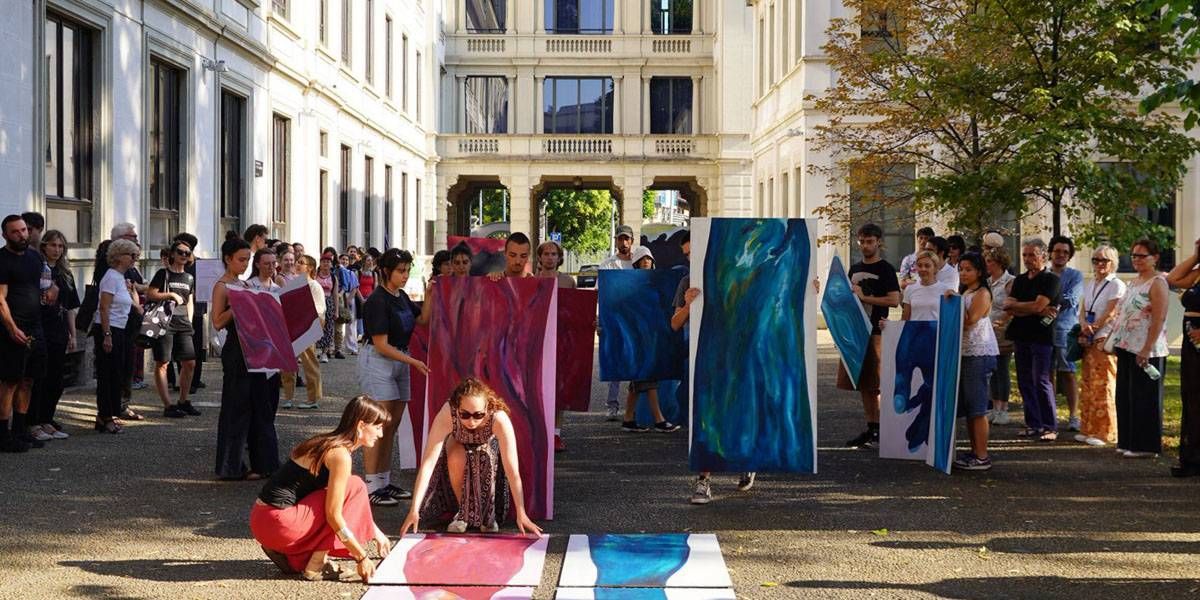
NABA’s teaching approach is based on learning by doing. Studios are at the heart of the educational experience: well-equipped, up-to-date spaces where students design, experiment and produce, often working on live briefs developed with partner companies. Class sizes are kept small to encourage a close working relationship with lecturers who are, in most cases, practising professionals — designers, art directors, directors, fashion designers, curators, artists and set designers — bringing the everyday reality of the profession directly into the classroom.
The Academy’s professional network is one of its most distinctive strengths. NABA works continuously with a broad network of companies and institutions, including Gucci, Etro, Diesel, Luxottica, Pirelli, BMW, Pininfarina, Luceplan, Armando Testa and Siemens, as well as more recent partners such as A2A, Venchi, Dr. Martens, Baldinini and Manteco. These collaborations take shape through workshops, course projects, public events and, above all, tangible opportunities for graduates. The Career Service and Alumni Relations Office manages more than 630 companies accredited for internships and placements through the NABA Symplicity platform, and supports students and graduates with CVs, portfolios and recruitment processes. The figures confirm the strength of this approach: according to the 2024/25 Doxa survey, 90% of NABA graduates find employment within one year of completing their studies, rising to 94% among those who complete a two-year Master of Arts programme or an Academic Master.
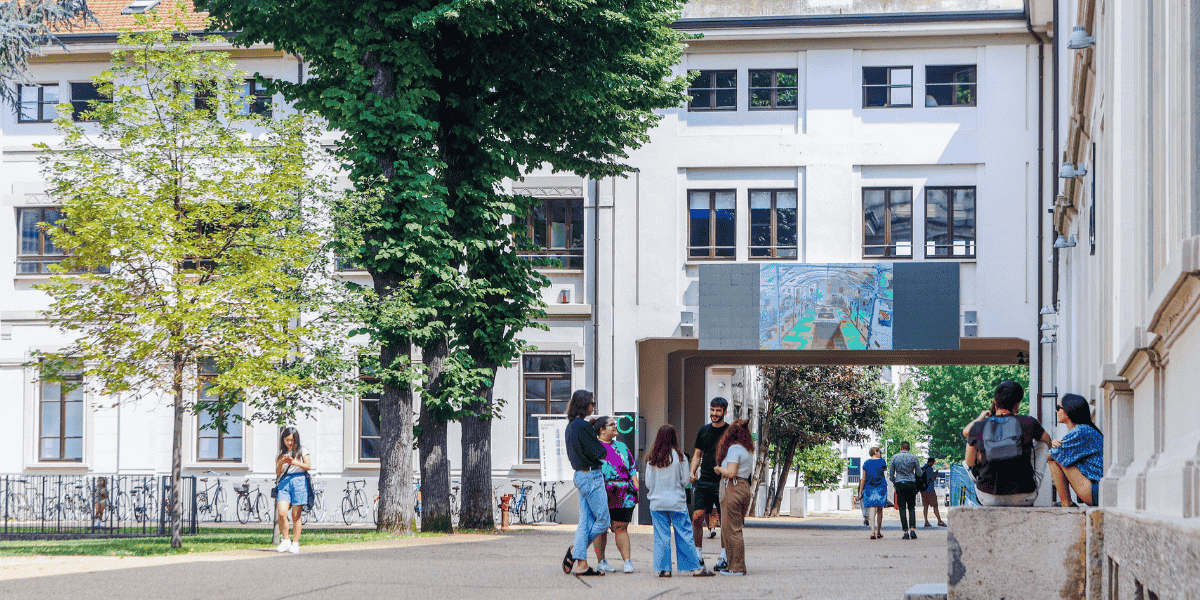
This academic offer is supported by a European network of campuses. The Milan campus covers 23,000 m² in the Navigli district, within a historic complex of fourteen buildings. The Rome campus occupies around 6,000 m² in the Ostiense district, now one of the capital’s most dynamic cultural areas. The London campus is located at Here East, in Queen Elizabeth Olympic Park, one of the most strategic areas in the British capital for design and the creative industries. Here East is the technology and creative hub developed from the former press and broadcasting facilities of the London 2012 Olympic Games, and is now home to organisations such as Studio Wayne McGregor, BT Sport, MATCHESFASHION and Plexal, an innovation centre working closely with start-ups, businesses and universities. Together, these campuses allow NABA students to study in three European cities central to design, fashion and contemporary culture, with the possibility of moving between campuses during their course.