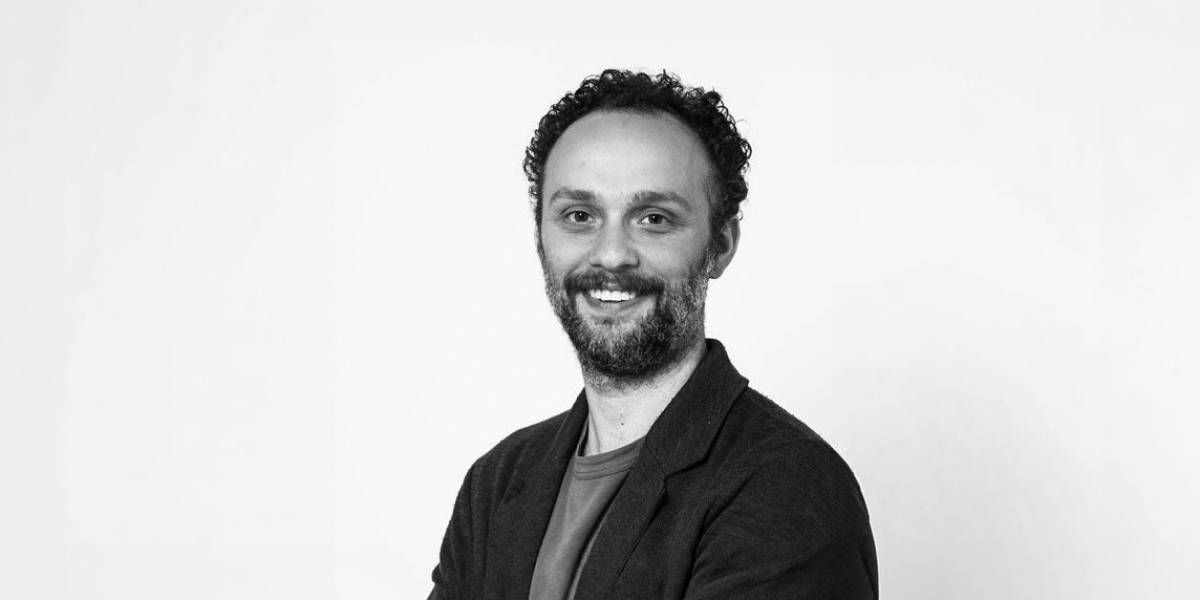
Two NABA faculty members will play a key role in the next edition of Paris Photo 2026, the leading international fair dedicated to photography and the image. Zasha Colah, NABA lecturer, and Francesco Zanot, Course Leader of the Academic Master in Photography and Visual Design, have in fact been appointed curators of the Voices section of the twenty-ninth edition of the event, scheduled to take place from 12 to 15 November 2026 at the Grand Palais in Paris.
The appointment takes on even greater significance as the 2026 edition will unfold at a historic moment for the photographic medium: the Bicentennial of Photography. To mark the occasion, two hundred years after its invention, Paris Photo will bring together galleries, artists, publishers, institutions and collectors from all over the world to celebrate the history, evolution and future perspectives of photography and image-based artistic practices.
Founded in 1997, Paris Photo is recognised as one of the most authoritative events on the international scene. Each year, the fair presents a curated selection of works spanning different periods, languages and approaches, from historic prints to the latest contemporary experimentation. Analogue processes, large formats, installations, photobooks, and digital projects coexist within a programme that reflects the ongoing evolution of the photographic medium.
Paris Photo 2026: Zasha Colah and Francesco Zanot to lead the Voices section
The twenty-ninth edition of the fair will take place in the spaces of the Grand Palais, one of the symbolic venues of the French capital, and will be structured around five sections: Main & Prismes Projects, Voices, Digital, Emergence and Book. The Voices section, in particular, invites international curators each year to select artists and practices from the contemporary scene, developing a shared curatorial project around themes and perspectives that are relevant to contemporary artistic debate.
As mentioned above, for the 2026 edition, Paris Photo has entrusted this role to Zasha Colah and Francesco Zanot, recognising the contribution of both professionals to curatorial research and critical reflection on the image. In addition to being NABA faculty members, both have highly significant professional backgrounds in the field.
Zasha Colah is a curator and writer. Since 2023, she has been co-artistic director of Ar/Ge Kunst in Bolzano, and in 2025 she curated the 13th Berlin Biennale. Francesco Zanot is a curator and writer. Since 2019, he has served as artistic director of Foto/Industria, the biennial promoted by Fondazione MAST in Bologna.
Their appointment represents an important international recognition and bears witness to the contribution of NABA faculty members within leading contexts of research, cultural production, and contemporary reflection on the image.
A recognition that forms part of a precise vision of photography and its teaching, as Francesco Zanot himself explains:
“Despite its apparent stability, photography continues to reinvent itself. Exactly two hundred years have now passed since the birth of this language, and the images we produce, observe and share today are profoundly different from those that came before them. The devices have changed, as have the contexts in which photographs circulate, their functions and the intentions of their authors.
Photographs now inhabit museums and galleries, where they have become one of the privileged tools of contemporary artistic research. At the same time, they also inhabit computer and phone screens, archives, social networks, and artificial intelligence systems. Young artists use photography as a hybrid, intermediate tool through which these transitions are both put into practice and represented.
In this scenario, the relationship between photography and truth has also been profoundly transformed. This calls into question one of the most deeply rooted beliefs in the history of the medium: its supposed ability to bear witness to reality in an objective and incontrovertible way. We have moved from the seen to vision.
It is from this awareness that our way of teaching photography takes shape: as a language rich in history, whose roots, techniques, and key figures it is essential to know, but also as a discipline in constant motion, always revolutionary, both witness to and protagonist of continuous transformation.”