



The Programme: overview
The Academic Master gives a new perspective on the role of urban designers, and allows the students to enhance their experience in reading into, interpreting and designing cities to face the new complexity of urban contexts, and complement it with practical actions also establishing relationships with local and international partners. Through the research of new ways to understand the city, this course develops the specific necessary skills to carry out new urban design projects, with specific attention to service design.
Over the AM, students will have the opportunity to:
- understand cities in their different scales and dimensions (physical cities, social cities, political cities) in order to develop Urban Design projects that take particular care in re-designing services (physical, social, political)
- develop a methodological approach to management and planning aimed at revitalising neighbourhoods or entire metropolitan areas, organising activities and temporary events for the community, and interconnecting buildings, transportation systems, social networks, and natural environment with attention to local communities
- interact with the main actors in the industry: institutions, associations, companies, architects, sociologists, anthropologists, and citizens.
Department: Design and Applied Arts
Area: Design
Title Awarded: First Level Academic Master Degree*
Credits: 60 CFA
Starting: NOT AVAILABLE
Duration: 1 year
Languages: English
Campus: Milan
*Degrees recognised by the MUR
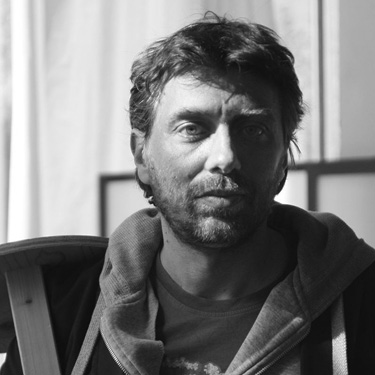
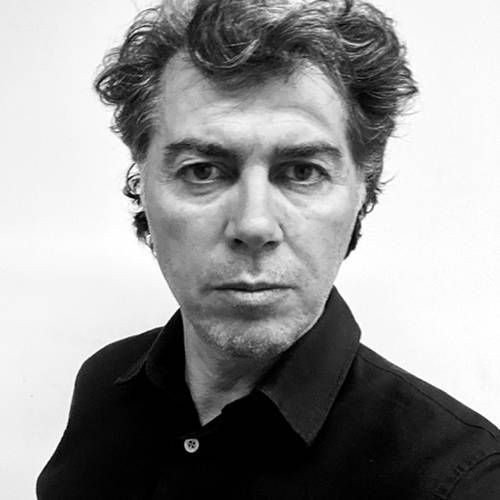
Our Faculty


Study and career opportunities
NABA’s Career Services & Industry Relations Office can provide you with support and guidance during your transition from the academy to the professional world. Our staff can help you develop self-promotion tools and assist you during your first steps into the world of work.
The Office develops relationships with companies in order to set up internship agreements, employment opportunities, and interactive projects between students and businesses.
NABA has developed strong relationships with leading companies which provide internships for NABA students. Among them are: Armani Hotel, Giulio Iacchetti, Studio Bestenheider, Vittorio Martini 1866, Giochi Preziosi, Intégral Ruedi Baur et Associés, The Swatch Group, Giorgio Armani, Pininfarina Extra, Tagua, Azimut-Benetti, Bonetto Design International, Alta Design & Engineering, AAAHHHAAA, Forchets, Studio di architettura Amedeo Guidobono Cavalchini, Aldo Cibic – Cibicworkshop, Progetto CMR Engineering, Integrated Services S.r.l., Abad Architetti S.r.l., Festina Italia, Zanotta, Luxottica, Studio Italo Rota & Partners, Giugiaro Architettura, Rintala Eggertsson Architects, Luceplan, Ikea Italia Retail, 3M ITALIA, Yellow Office, Studio Lissoni Associati, Studio Barreca & Lavarra, Uragano Studio, Veneta Cucine, Dado Arredamenti.
Kick-off your career. Among the career opportunities:
-
Urban designer
-
Public administration consultant
-
Consultant for public utility and multi-utility companies
-
City brand designer
-
Collaborator at architecture/ engineering practices, urban design companies
Course Details
Detailed information on structure, teaching, assessment, entry requirements and fees for the BA (Hons) Fashion Design delivered at the NABA London Campus.
Course Overview
The partnership agreement between NABA London Ltd and Regent's University London is reviewed periodically. The agreement was last renewed / confirmed in April 2026 and is due for review in 2031.
In the event that the agreement is not renewed, NABA London Ltd will inform enrolled students in a timely manner and take all reasonable steps to ensure continuity of their studies.
- Year 1: 5 October 2026 – 14 June 2027
- Year 2: 4 October 2027 – 18 June 2028
- Year 3: 2 October 2028 – 17 June 2029
Students requiring a UK Student Visa should use these dates as the basis for their visa application.
The BA (Hons) Fashion Design is delivered at the NABA London Campus, Here East, Queen Elizabeth Olympic Park, 14 E Bay Ln, London E15 2GW.
All teaching, studio sessions, workshops and examinations take place at this single site. Students are not required to travel between multiple locations during their studies.
The BA (Hons) Fashion Design is not currently accredited by a professional, statutory or regulatory body (PSRB). Successful completion of this course does not confer membership of, or automatic entry to, any regulated profession.
Additional requirements may apply depending on the relevant professional body or regulatory authority.
Course Structure
The course is organised into two Terms:
- Fall (October – January): 12 weeks + 1 week of intensive workshops
- Spring (February – May): 12 weeks
An alternative intake (second entry point) is possible at Level 3 (Foundation) and at Level 4 (BA First Year) according to this calendar:
- Spring (January – April): 12 weeks + 1 week of intensive workshops
- Summer (April – July): 12 weeks
Teaching and learning activities during each Term require mandatory attendance. Each Term is followed by an assessment period and a break from academic activities.
The BA (Hons) Fashion Design is worth 360 UK credits (180 ECTS), with 120 credits per year of study and 60 credits for each Term. Each credit represents approximately 10 notional hours of study, divided between direct learning activities (lead events, seminars, supervised studio work) and self-guided learning.
All modules in Year 1 and Year 2 are worth 10 credits. Some modules at Level 3, related to the Final Project, are worth 20 credits.
Degree classification is based on a weighted average of grades awarded in Year 2 (30%) and Year 3 (70%).
All modules are mandatory. Elective subjects are not provided, with the only exception of the Interdisciplinary Workshops: you may choose a project topic among a range of different possibilities.
Timetable & Attendance
Classes take place from Monday to Friday, typically between 09:00 and 19:00.
Students with significant external commitments (employment, family care) are encouraged to discuss their circumstances with the Admissions team before applying.
Teaching & Learning
The BA (Hons) Fashion Design schedules approximately 18–20 class contact hours per week at every level, although contact teaching hours may fluctuate from week to week. Practical activities and supervised studio work increase progressively from Year 0 to Year 3.
Through teaching and learning "by doing", we intend to provide you with that "artistic intelligence" — a combination of different forms of intelligence and a key asset for your future design-oriented career in the creative industry. These teaching methods may include:
- Lead events
- Lectures
- Tutorials
- Project development and rework
- Studio work — different activities performed in classrooms (brainstorming sessions, co-design sessions, autonomous work)
- Workshops — different activities performed in laboratories (tutorials, practical sessions on crafting tools and machinery, autonomous work)
- Performances
- Online asynchronous learning
- Self-directed learning
The learning experience may also include site visits, field explorations and excursions. All teaching and learning experiences are meant to be inclusive, respectful of differences among people, and conducive to safe environments of self-expression.
- Studio sessions and workshops: max 28 students
- Lectures and seminars: max 40 students
Each credit represents 10 notional hours of study, divided between direct learning activities and self-guided learning (research, reading, sourcing, project development, lab activity). As a full-time student, you should expect to commit approximately 1,200 hours per year in total.
Direct learning activities represent approximately 40% of notional hours and self-guided learning approximately 60%.
Academic support
Study skills, academic writing, research methods and time management. Contact the Head of Education at Diego.Mattiolo@naba.ac.uk, available Monday to Friday, 9 to 19.
Disability & additional needs
Students with disabilities, long-term health conditions, mental health difficulties or specific learning differences (e.g. dyslexia, dyspraxia, ADHD) are encouraged to disclose their needs to the Student Services team as early as possible. NABA London will arrange reasonable adjustments. See our Disability Policy on the regulatory documentation page.
Physical accessibility
The campus is designed to be accessible to all. Step-free access, ramps and automatic doors at key entrances, lifts to all floors, accessible toilets, designated disabled parking bays, clear wayfinding and wide, well-maintained pathways. Assistance on arrival can be arranged on request.
Counselling & wellbeing
Confidential wellbeing support including signposting to one-to-one counselling, wellbeing check-ins and guidance on stress, anxiety and mental health. Available weekdays; book via Student Services, with urgent cases prioritised. Workshops on wellbeing, resilience and self-care may also be offered throughout the year.
Assessment & Feedback
The table below shows the indicative weighting (%) of each assessment type across Levels 3 to 6 for the BA (Hons) Fashion Design.
| Assessment type | Level 3 | Level 4 | Level 5 | Level 6 |
|---|---|---|---|---|
| Portfolio | 56% | 72% | 68% | 48% |
| Presentations | 4% | 9% | 8% | 12% |
| Coursework | — | — | — | 12% |
| Workbook | — | — | — | 2% |
| Visual Analysis | 10% | 17% | 8% | — |
| Essay | 30% | 2% | 8% | 8% |
| Video | — | — | 8% | — |
| Final Collection | — | — | — | 10% |
| Final Project | — | — | — | 8% |
Figures are indicative and may be subject to review in line with Regent's University London academic regulations.
Alongside formal graded assessments, the courses include regular formative assessment opportunities. Formative assessments are practice activities — such as mid-module critiques, draft submissions and peer review sessions — designed to help students develop their work and receive tutor feedback before final submission.
Formative assessment does not count towards module marks or degree classification. Each module typically includes at least one formative assessment opportunity.
NABA London aims to provide your grade and feedback no more than three working weeks following the submission deadline. Feedback is intended to support your learning and progression — you are encouraged to discuss it with your module tutor during office hours or at your scheduled tutorial.
To progress from one year of study to the next, students must pass all compulsory modules at the required level. The minimum pass mark for each module is in line with Regent's University London academic regulations.
Students who do not achieve a pass mark will normally be given a further resit opportunity; resit outcomes are capped at the pass mark. The maximum number of permitted assessment attempts for any module is three: a first attempt, a capped resit attempt (if the first attempt was a fail) and a capped retake with attendance (if the resit attempt was a fail).
Full progression regulations: regents.ac.uk/policies
In certain circumstances, a fail mark in one module may be offset — or "condoned" — allowing a student to progress without a retake. A condoned pass is recorded on your transcript.
Condonement is not automatic and is subject to the academic regulations of Regent's University London. Not all modules are eligible for condonement.
Full details: regents.ac.uk/policies
Entry Requirements
Integrated Foundation Year
Applicants must normally have a recognised high school diploma or equivalent qualification, and an academic background suitable for preparatory study at UK Level 3. Minimum age: 17 at the start of the course.
BA (Hons) — UK students
Normally 80 UCAS tariff points or an equivalent qualification. Common examples: A Levels at Grade BB; BTEC National Extended Diploma MMP; Foundation Diploma Pass.
BA (Hons) — EU / International
International qualifications are considered on an individual basis, assessed using recognised UK comparison frameworks. Contact the Admissions team for guidance on equivalencies.
Mature students
We welcome applications from mature students with relevant experience; all applications are considered on an individual basis.
Applicants must demonstrate English language ability equivalent to CEFR B2:
- Integrated Foundation Year: IELTS UKVI (Academic) — overall 5.5, with 5.5 in each component, or another recognised qualification at an equivalent level.
- BA (Hons): IELTS Academic — overall 6.0, with no component below 5.5, or another recognised qualification at an equivalent level.
Contact the Admissions team for guidance on equivalencies.
Applicants with some experience of higher education can enter one of our BA (Hons) courses. You can find our Admissions Policy on the regulatory documentation page.
Fees & Financial Support
NABA reviews tuition fee levels annually and reserves the right to increase fees for academic years subsequent to the first year of entry by inflation (RPI excluding mortgage interest payments) and/or the maximum permitted by law or government policy (which may exceed the rate of inflation).
If NABA intends to exercise this right, it will notify students in writing by the end of June in the academic year before. If such changes negatively impact a student, they may request to change course or withdraw from the programme and will be entitled to a refund in accordance with our Refund Policy on the regulatory documentation page.
NABA London's annual tuition fee covers teaching, academic support, assessment and access to facilities.
Depending on your course, you may incur additional costs not included in the tuition fee, such as materials, specialist equipment, software and optional study trips. Additional costs may vary depending on individual project choices. Indicative information is provided in the Course and Module specifications.
NABA London does not own its own student accommodation. Instead, we provide guidance on accommodation options to support you in arranging your housing. The cost of living in London varies depending on lifestyle and accommodation choice.
As a guide, students typically budget between £1,350 and £1,800 per month to cover living costs such as accommodation, food, transport and personal expenses.
For students requiring a visa, UK Visas and Immigration (UKVI) currently requires students to show they have £1,529 per month for living costs in London, for up to 9 months. As this figure may be updated, applicants should refer to the UKVI website for the most current requirements.
The BA (Hons) Fashion Design at NABA London is not currently eligible for funding through Student Finance England. UK applicants should ensure they have appropriate funding in place before enrolment. Information on scholarships and any available fee reductions is provided on our website.
Study Plan
- Methodology of Design Processes
- Drawing Techniques
- Crafting Techniques
- Computer Graphic
- History of Art
- Interdisciplinary Workshops – Explorations
- Fashion Design – Fashion Drawing
- Basic Patterns and Prototyping
- Textile Design – Textile Making
- Digital Drawing – Tools
- History of Costume
- Fashion System
- Fashion Design – Womenswear
- Patterns and Prototyping
- Textile Design – Knitwear
- Digital Drawing – Digital Prototyping
- Contemporary Arts
- Interdisciplinary Workshops – Extensions
- Fashion Design – Market Driven
- Advanced Patterns and Prototyping
- Textile Design – Textile Drawing
- Fashion Video
- Semiotics
- Photography
- Final Project – Research and Design
- Final Project – Textile Design
- Digital Drawing – 3D Modeling
- Marketing
- Interdisciplinary Workshops – Envisioning
- Final Project – Synthesis
- Final Project – Production
- New Digital Technologies
- Career Perspectives
- Fashion Styling